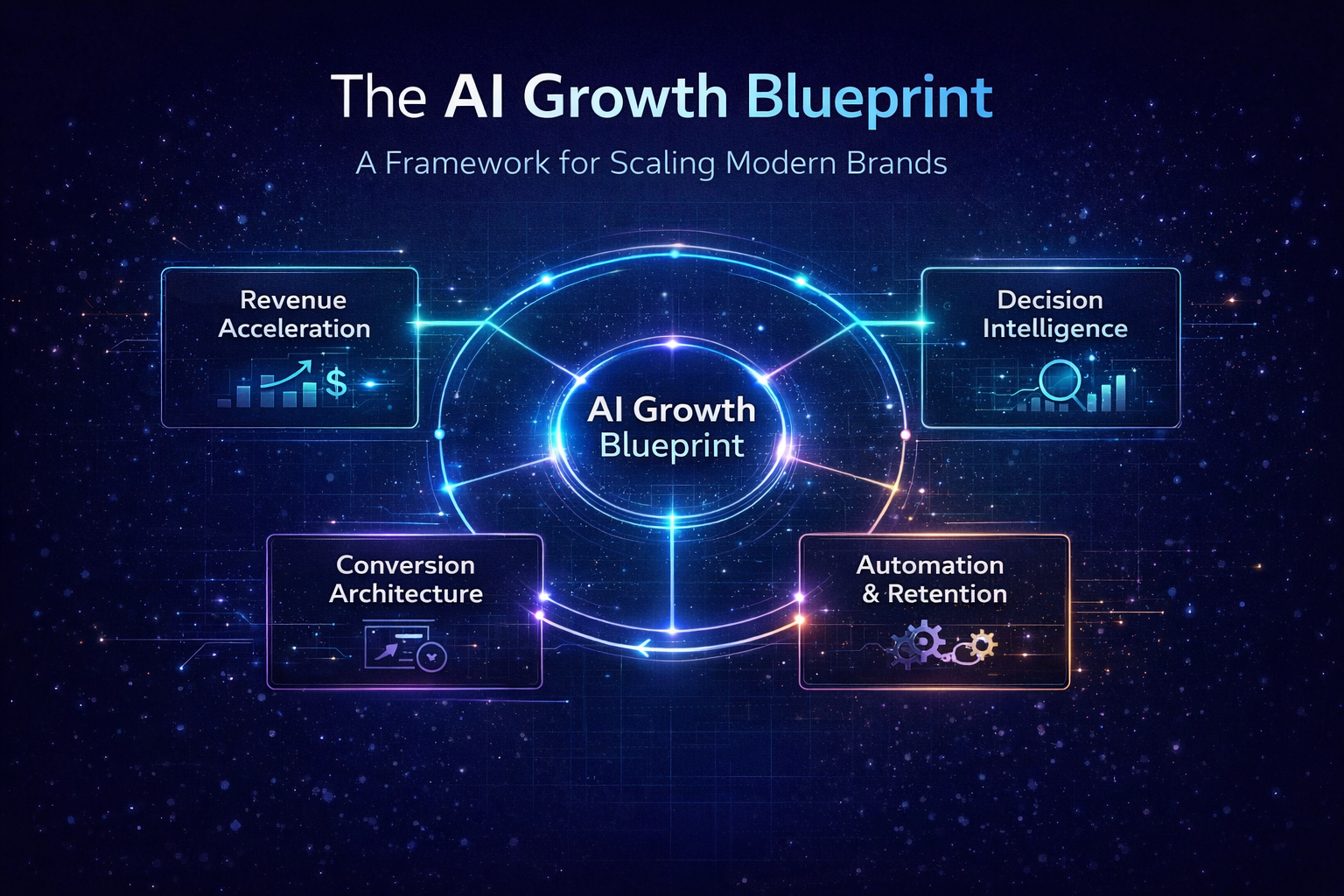
The AI Growth Blueprint: A Framework for Scaling Modern Brands
Modern brands don’t fail because they lack effort.
They fail because they lack structure.
Marketing today is complex:
- Paid ads
- SEO
- Content
- Automation
- CRM
- Analytics
- AI tools everywhere
But complexity does not equal scalability.
What scales is architecture.
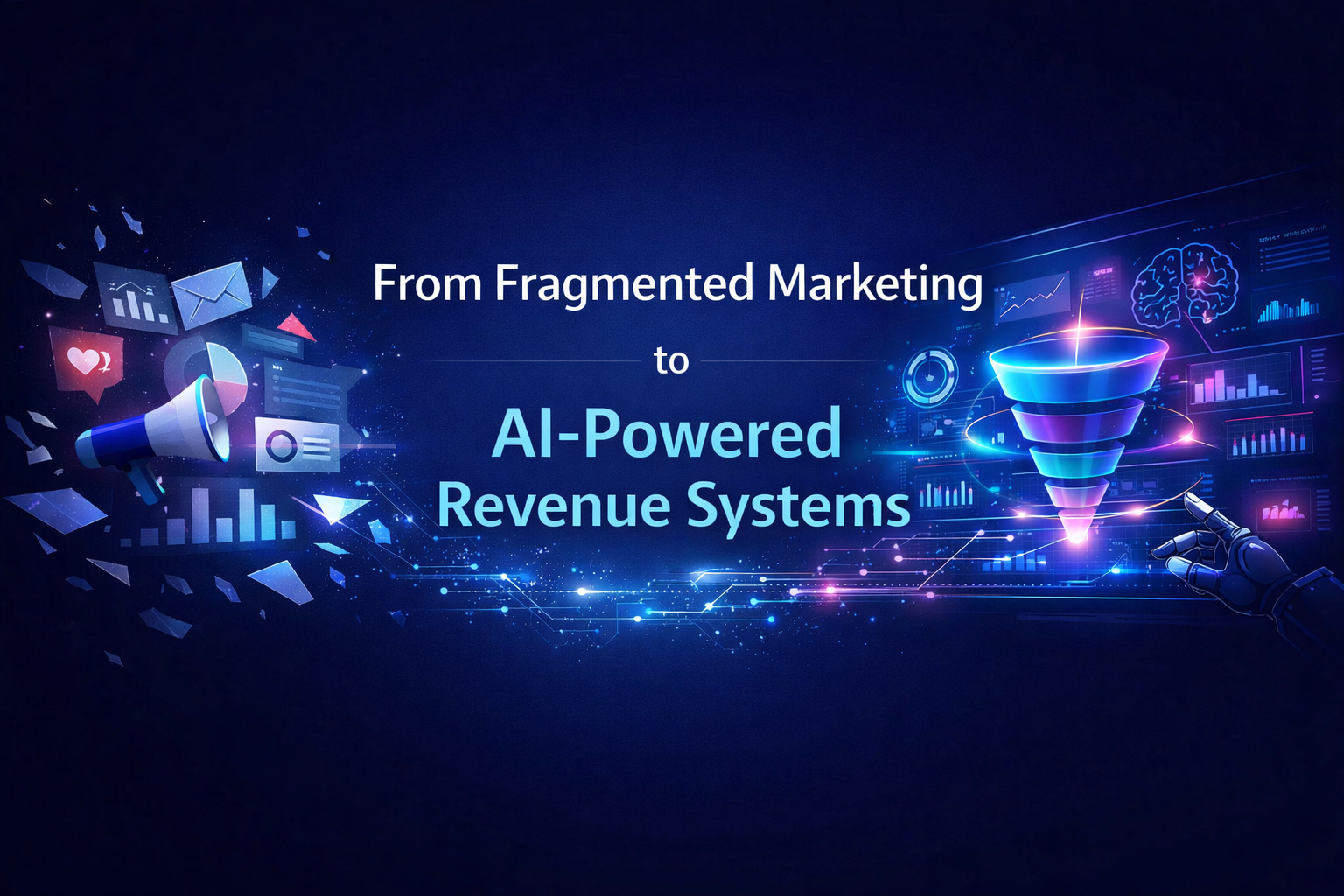
The AI Growth Blueprint is a structured framework designed to transform fragmented marketing into a unified, scalable revenue system.
What Is the AI Growth Blueprint?
The AI Growth Blueprint is a strategic framework that integrates acquisition, conversion, automation, retention, and forecasting into a single AI-powered growth architecture.
It replaces isolated marketing activities with a measurable, optimised system designed for predictable revenue.
It is not a tool.
It is a structure.
Why Modern Brands Need a Growth Blueprint
Most businesses operate in silos:
- Ads team optimises campaigns.
- SEO team chases rankings.
- CRM team sends emails.
- Leadership reviews dashboards.
But no one integrates the system.
Without integration:
- CAC rises
- ROAS fluctuates
- Revenue becomes unstable
- Scaling becomes risky
The AI Growth Blueprint connects these moving parts into one adaptive engine.
The 4 Pillars of the AI Growth Blueprint
The framework is built on four interconnected pillars.
Each feeds the next.
Pillar 1: Revenue Acceleration
Objective: Acquire high-intent users efficiently.
This includes:
- AI-powered paid media strategy
- Predictive audience segmentation
- Budget allocation modelling
- Creative optimisation systems
- CAC optimisation
AI enables real-time bid adjustments, audience expansion modelling, and performance forecasting.
Acquisition becomes controlled — not reactive.
Pillar 2: Conversion Architecture
Objective: Turn traffic into revenue.
Conversion architecture includes:
- High-performance landing systems
- Funnel sequencing logic
- Behaviour-triggered experiences
- Conversion rate optimisation (CRO)
- Checkout and UX optimisation
AI identifies:
- Drop-off friction
- User intent clusters
- Personalisation opportunities
Higher conversion rate means scalable growth without proportional spend increases.
Pillar 3: Automation & Retention Systems
Objective: Maximise lifetime value.
This includes:
- Behaviour-based automation
- Predictive churn detection
- Subscription retention modelling
- Upsell sequencing
- CRM intelligence layering
AI identifies revenue expansion opportunities before customers disengage.
Retention compounds growth.
Pillar 4: Decision Intelligence & Forecasting
Objective: Remove guesswork from scaling.
This includes:
- Revenue forecasting models
- ROAS sustainability analysis
- Margin impact modelling
- Budget allocation simulation
- Growth scenario planning
Instead of asking:
“Should we scale?”
The system answers:
“When and how should we scale?”
Forecasting reduces risk.
Reduced risk accelerates growth.
How the AI Growth Blueprint Differs from Traditional Marketing
| Traditional Marketing | AI Growth Blueprint |
|---|---|
| Channel-based | System-based |
| Reactive optimisation | Predictive optimisation |
| Campaign reporting | Revenue forecasting |
| Department silos | Unified architecture |
| Short-term wins | Compounding scalability |
Traditional marketing focuses on outputs.
The Blueprint focuses on structure.
How AI Enhances the Blueprint
AI enhances the framework by enabling:
- Real-time optimisation
- Predictive modelling
- Dynamic audience segmentation
- Automated testing
- Behaviour forecasting
- Continuous learning loops
Without AI, growth systems move slowly.
With AI, they adapt continuously.
What Makes This Framework Scalable?
Scalability requires:
- Stable acquisition cost
- Strong conversion efficiency
- Predictable retention
- Reliable forecasting
When all four pillars operate together, revenue becomes compounding rather than volatile.
That is the difference between growth and spikes.
Frequently Asked Questions
What is an AI growth framework?
An AI growth framework is a structured marketing architecture that uses artificial intelligence to integrate acquisition, conversion, automation, and forecasting into a scalable revenue system.
Is the AI Growth Blueprint suitable for small businesses?
Yes. The framework scales based on budget and complexity. Even SMEs can implement core components of acquisition optimisation, automation, and forecasting.
Does AI replace marketing strategy?
No. AI enhances execution and decision-making, but strategy and system design remain human-led.
Who Is This Framework For?
The AI Growth Blueprint is designed for:
- Ecommerce brands scaling beyond initial traction
- B2B companies needing predictable lead flow
- Founders tired of revenue volatility
- Marketing teams seeking system integration
It is not for businesses looking for quick hacks.
It is for those building long-term growth architecture.
Final Thought
Growth does not come from doing more.
It comes from connecting what already exists into a smarter system.
The AI Growth Blueprint transforms:
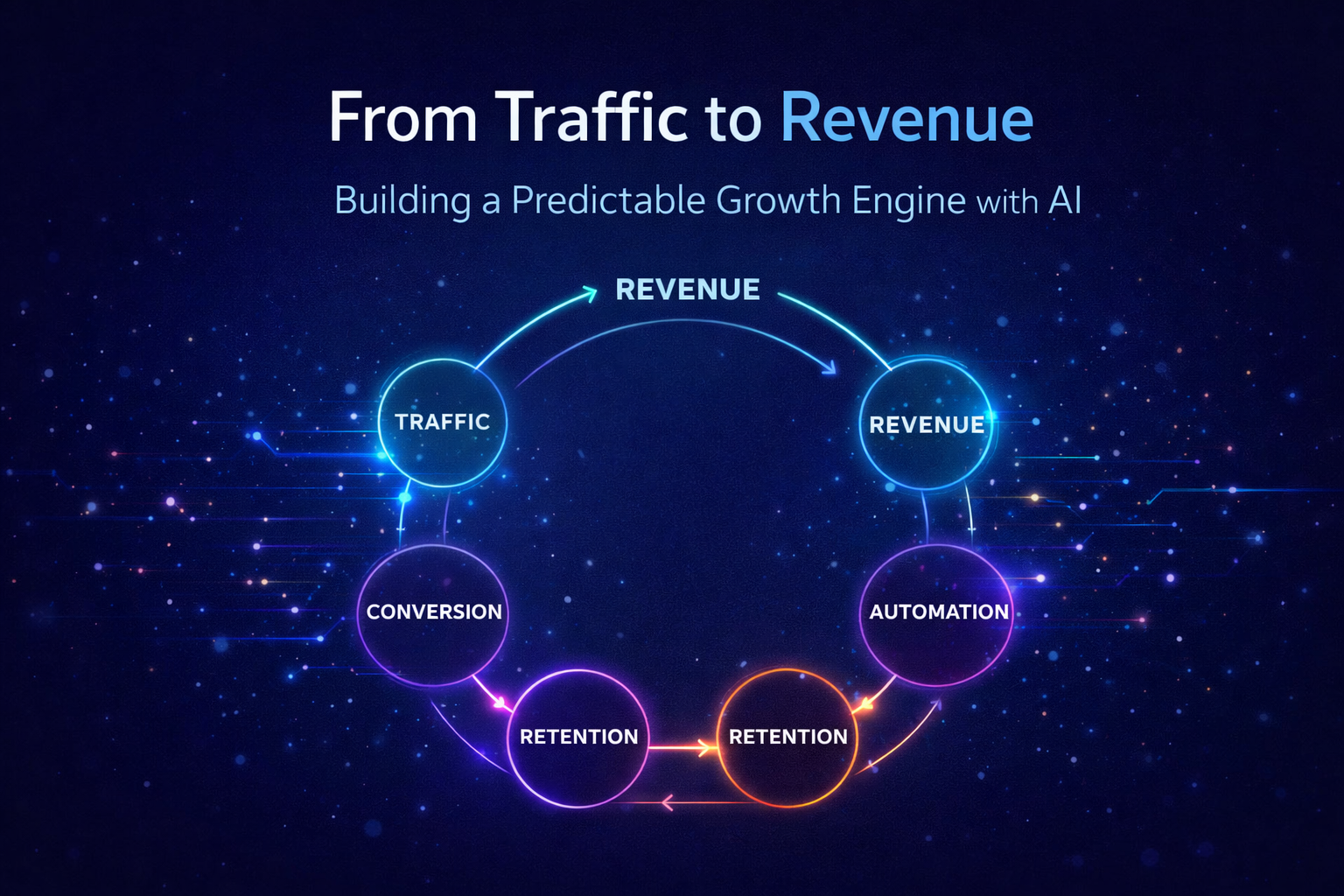
Traffic → Conversion → Automation → Retention → Forecasting
into one continuous, optimised loop.
When architecture replaces fragmentation, scale becomes sustainable.

Leave a comment: